

In 1971, Daniel Ellsberg released “The History of U.S. Decision-Making in Vietnam, 1945–1968”, now known as “The Pentagon Papers” to the media.
This study focused on the contents of classified U.S. Department of Defense documents and shattered the illusion of government transparency in the realm of the Vietnam War. This included information meticulously detailing the inner workings and deceptions of successive U.S. presidential administrations (Truman, Eisenhower, Kennedy, and Johnson) regarding the Vietnam War. This created a credibility gap in journalism, as many Americans began to distrust official reports of the war; public opinion of involvement in Vietnam was already dwindling due to the Tet Offensive, but Ellsberg’s whistleblowing tanked it further.
Expectedly, the government had an unfavorable reaction to this; Ellsberg experienced not only the burglarizing of his psychiatric records by U.S. intelligence agents, but also illegal wiretapping by the Federal Bureau of Investigation. His experience laid the crucial framework for the future of government whistleblowers such as Chelsea Manning and Edward Snowden in the age of information and advanced warfare, strenuously searching for the truth while risking their livelihoods. Despite that risk, though, these individuals still dedicated themselves to notifying the public of the wrongdoings of their governments. Consequentially, government whistleblowers (especially in the United States) are essential for promoting transparency, accountability, and democratic governance in modern society. Thus, whistleblowers must not be unjustly vilified or silenced but rather recognized for their invaluable contributions to a more informed and democratic society.
In online correspondence, Chelsea Manning said,
I want people to see the truth, regardless of who they are, because without information you cannot make informed decisions as a public.
These words marked one of Manning’s clear motives for leaking the Iraq and Afghan War Logs, hundreds of thousands of diplomatic cables, and the infamous aerial footage of a Baghdad airstrike. These leaks provided a raw, unfiltered view of the conflicts, revealing incidents of civilian casualties and the callous attitudes of some military personnel involved. Manning's intention was not to incite chaos or undermine national security but rather to empower the public with knowledge that is essential for holding institutions accountable and shaping meaningful discourse on matters of war, diplomacy, and human rights.
Moreover, Manning’s leaks were part of a larger movement catalyzed by WikiLeaks, spearheaded by Julian Assange. Without Assange’s publication, Manning’s leaks would have never had a voice in the media. In addition to that, Assange's role through WikiLeaks has significantly contributed to promoting transparency and accountability globally. One notable example is the publication of the Guantanamo Files in 2011. These files, leaked by WikiLeaks, contained detailed information about the detainees held at the Guantanamo Bay detention camp, including their backgrounds, alleged activities, and the evidence (or lack thereof) against them. The release of these files brought attention to the controversial practices and lack of due process in the detention and interrogation of suspected terrorists, sparking international debate and scrutiny of the U.S. government's actions in the War on Terror.
As a result of the release of this material, public opinion has surely been affected in a similar way proceeding the release of “The Pentagon Papers”; a Pace University study based on online surveys and exposure to WikiLeaks articles showed a noticeable decrease in trust for the government. Hence, Manning's and Assange's efforts through WikiLeaks not only illuminate critical issues of human rights, but also fuel a movement towards greater transparency, as evidenced by the significant impact on public perception and trust in government institutions.
The existence of government whistleblowers also ensures accountability.
During the early 1970s, the actions of the whistleblower known as "Deep Throat" in the Watergate scandal were instrumental in ensuring accountability within the government and uncovering widespread corruption at the highest levels of power. Deep Throat, later revealed to be Mark Felt, the Associate Director of the FBI at the time, provided crucial information to journalists at The Washington Post to uncover illegal activities within the Nixon administration. These activities included the burglary of the Democratic National Convention headquarters, wiretapping, and poor attempts to hide their involvement. The revelations from Felt's leaks triggered a cascade of investigations, congressional hearings, and legal proceedings that ultimately resulted in the resignation of President Richard Nixon. Felt’s courage and commitment to revealing the truth, despite the risks involved, exemplify the vital role whistleblowers play in uncovering wrongdoing and preserving the integrity of democratic institutions.
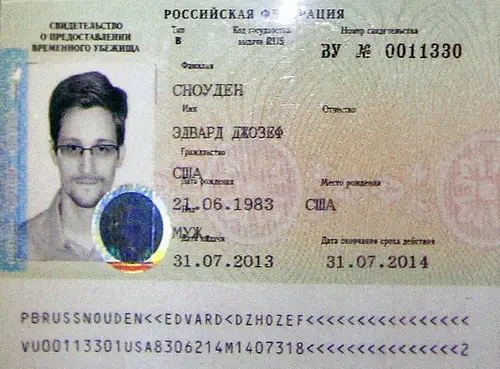
This event was echoed in 2013, when Edward Snowden leaked classified documents to journalists, exposing the vast scope of the National Security Agency's mass surveillance programs, including the collection of phone metadata of millions of Americans and global internet surveillance activities. Snowden's disclosures led to increased scrutiny and accountability mechanisms within the government, prompting congressional hearings, judicial reviews, and reforms aimed at enhancing transparency and oversight of surveillance practices. For instance, the USA Freedom Act, passed in 2015, imposed restrictions on bulk data collection and introduced measures for judicial review of surveillance requests. Both Edward Snowden and Deep Throat exemplify the bravery and moral conviction of whistleblowers who risked their careers to reveal wrongdoing and promote accountability within government institutions.
One accusatory concern of the existence of government whistleblowers is the supposed security risk they pose to global authorities; skeptics believe information leaks can harm the global interests of the United States.
After Chelsea Manning’s immense number of leaks got out to the public, many believed such a revelation would lead to further increased tension in the Middle East and with U.S. allies. This same belief was paraded by the Department of Defense when it came to sentencing Manning, as the threat of decades behind bars was held above her head. Additionally, her pre-trial detention treatment was deemed “cruel, inhuman, and degrading” after a 14-month investigation by Juan Mendez, the (at the time) United Nations Special Rapporteur on Torture. However, a look at declassified documents obtained by BuzzFeed News under a Freedom of Information Act suit proves that the cruelty inflicted on Manning was without any true, desperate purpose. Although heavily redacted, what is clear in the report is that the Iraq leaks would have “no direct personal impact on current and former U.S. leadership in Iraq”. The same was said for U.S. operations in Afghan; despite the concern expressed in the document for “cooperative Afghans, Iraqis, and other foreign interlocutors”, no evidence since the entry and exit of U.S. troops in Afghanistan (2001-2021) has proved such to be a legitimate area of interest. The true effect of Manning’s bravery was the enlightenment of American citizens on wars authority misled them into supporting, but her harsh treatment suppressed the spread of such insight.
Furthermore, the reformative effect of whistleblowing can be clearly seen in, as described before, the passing of the USA Freedom Act because of Edward Snowden’s NSA leaks. Hence, the perceived concerns about security risks posed by government whistleblowers are unfounded, as evidenced by the lack of direct personal impact on national security from Manning's leaks and the subsequent positive impact on transparency and accountability through Snowden’s whistleblowing.
As all the above points have demonstrated, the legacy of government whistleblowers like Daniel Ellsberg, Chelsea Manning, Edward Snowden, and Mark Felt emphasize the role they have played in spreading transparency and accountability in governance.
The actions of these individuals have shed light on administrative wrongdoing, led to reforms in law, and increased/affected the public perception of how much their leaders should be trusted. Nonetheless, despite these contributions, these whistleblowers still face vilification; as a result, society should not only recognize government whistleblowers, but also protect them in order to ensure they are not unjustly punished for their efforts to uphold ethical standards. As citizens, it is our responsibility to demand transparency and accountability from our governments. By advocating for forms of whistleblower protection and holding our elected officials accountable, we can contribute to a more democratic society for ourselves and future generations. Let us remember the words of Chelsea Manning, “I want people to see the truth, regardless of who they are, because without information you cannot make informed decisions as a public”. It is through transparency and access to information that we can ensure a government that serves the interests of the people.
Further Reading
Gross, Terry. “How the Pentagon Papers Changed Public Perception of the War in Vietnam.” NPR.org, 18 June 2021, www.npr.org/2021/06/18/1007573283/how-the-pentagon-papers-changed-public-perception-of-the-war-in-vietnam.
Leigh, David, et al. “Guantánamo Leaks Lift Lid on World’s Most Controversial Prison.” The Guardian, 25 Apr. 2011, www.theguardian.com/world/2011/apr/25/guantanamo-files-lift-lid-prison.
Leigh, David, and Luke Harding. WikiLeaks. Guardian Books, 2011.
Leopold, Jason. “Secret Report Contradicts US Position on Chelsea Manning Leaks.” BuzzFeed News, 20 June 2017, www.buzzfeednews.com/article/jasonleopold/secret-government-report-chelsea-manning-leaks-caused-no#.bfZJ7wWVW.
Library of Congress. “Daniel Ellsberg and the Pentagon Papers | Crime, Corruption, and Cover-Ups | Library of Congress.” Library of Congress, Washington, D.C. 20540 USA, www.loc.gov/exhibitions/drawing-justice-courtroom-illustrations/about-this-exhibition/crime-corruption-and-cover-ups/daniel-ellsberg-and-the-pentagon-papers/.
Nakashima, Ellen. “With Deadline Near, Lawmakers Introduce Bill to End NSA Program.” Washington Post, 9 Apr. 2023, www.washingtonpost.com/world/national-security/with-deadline-near-lawmakers-introduce-bill-to-end-nsa-program/2015/04/28/8fd1cf6e-edb4-11e4-a55f-38924fca94f9_story.html
Nicks, Denver. Private: Bradley Manning, Wikileaks, and the Biggest Exposure of Official Secrets in American History. Chicago Review, 2012.
Packer, George. “The Holder of Secrets.” The New Yorker, 10 Oct. 2014, www.newyorker.com/magazine/2014/10/20/holder-secrets.
Pilkington, Ed. “Bradley Manning’s Treatment Was Cruel and Inhuman, UN Torture Chief Rules.” The Guardian, 12 Mar. 2012, www.theguardian.com/world/2012/mar/12/bradley-manning-cruel-inhuman-treatment-un.
Sheehan, Neil. “Vietnam Archive: Pentagon Study Traces 3 Decades of Growing U. S. Involvement.” The New York Times, 13 June 1971, www.nytimes.com/1971/06/13/archives/vietnam-archive-pentagon-study-traces-3-decades-of-growing-u-s.html.
Small, Hazel. The Impact of Wikileaks on the Public Opinion of Online Privacy. 2019, digitalcommons.pace.edu/cgi/viewcontent.cgi?article=1272&context=honorscollege_theses.
“United States of America v. Felipe de Diego.” Justia Law, 16 Apr. 1975, law.justia.com/cases/federal/appellate-courts/F2/511/818/398519/.
Woodward, Bob. The Secret Man. Simon and Schuster, 2012.