


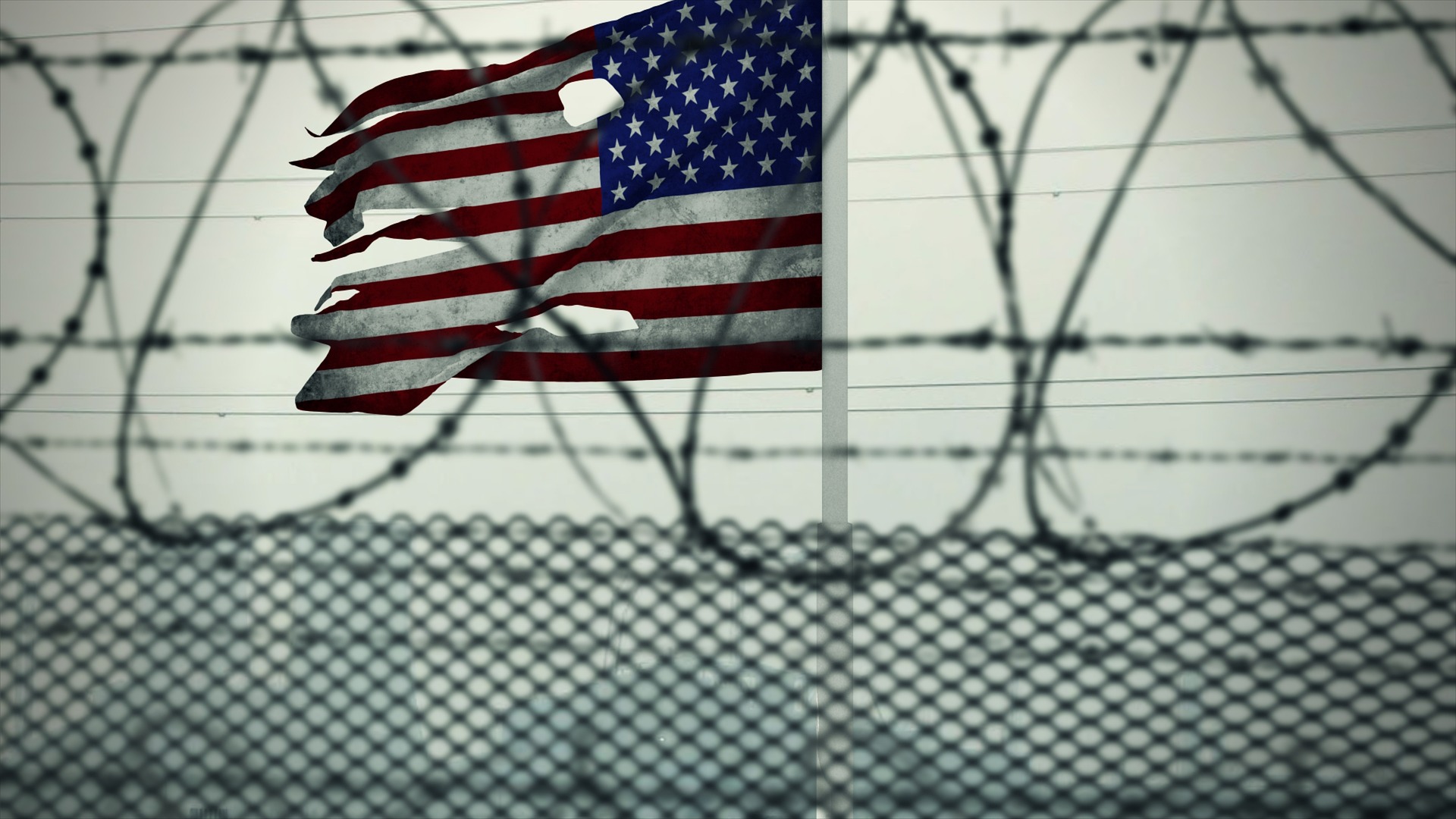
1.7 million people are incarcerated in the American prison system, which supports the overarching prison industrial complex – 1.7 million lives and 1.7 million stories.
For reference, the prison industrial complex is a system based on the overlapping interests of institutions of incarceration, the government, and private corporations. Of the ~171,600 of those in federal prisons, each of them earns a whopping $0.12 to $1.15 per hour of prison labor, and the pay can be even more abysmal in state prisons and county jails.
However, this shouldn’t be a surprise; the 13th Amendment spells this out clearly for everyone to see, as it says,
Neither slavery nor involuntary servitude, except as a punishment for crime whereof the party shall have been duly convicted, shall exist within the United States, or any place subject to their jurisdiction.
These inmates may even be forced to create combat helmets for the Department of Defense through the Federal Prison Industries (FPI), which exclusively creates products for the federal government. What helps finish this cycle of labor is the outrageously high recidivism rate – the rate of prisoners relapsing back into criminal behavior and becoming incarcerated – as a study by the Bureau of Justice Statistics showed that, in a study among 24 states in 2008, 82% of prisoners were rearrested at least once during the 10 years that followed their release. The American prison system is insanely flawed, and to rehabilitate criminals and prevent increasing recidivism, we must address the poor conditions and the extreme prevalence of corruption in our prisons.
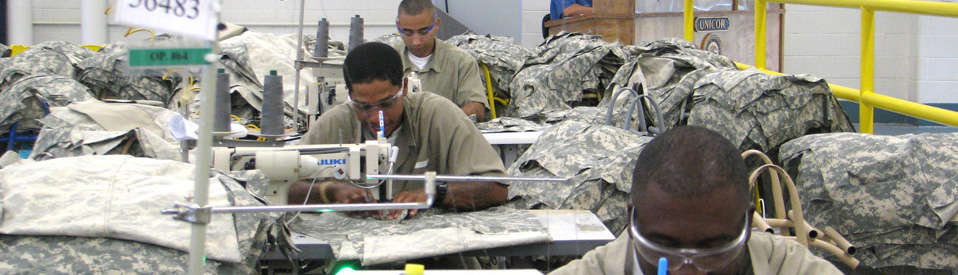
Source: Federal Bureau of Prisons
Because of the economic system the United States is under and has been built on, many decisions made by the government are made purely from monetary motives.
This is clear when looking at the FPI, – which also goes by UNICOR as its trade name – which is a government organization focused on putting inmates to work. UNICOR itself claims that its systems of labor “helps offenders learn the skills necessary to transition from prison to law-abiding, contributing members of society”. While it is true that inmates learning things such as marketable skills will ease the transition back into society after their release, UNICOR oversees its “learn[ing]” of skills in the wrong ways. To add, UNICOR, for the most part, only gives its products to the federal government, but on their website, UNICOR states that they can work with private sector companies to “utilize our labor force to manufacture their own products, [sic] or purchase directly from UNICOR”. Of course, “utiliz[ing] their labor force” is not as humane as it may seem; UNICOR is notorious for putting their own “labor force” through questionable conditions. Their largest sector is recycling, and throughout the years, they have continuously been caught exposing prisoners and staff to toxins (such as lead) via recycling electronics; none of the prisoners were supplied with protective equipment. Of course, lead has been regulated by the federal government through the Environmental Protection Agency, but that does not apply to prisoners, as one prisoner accounted:
What I… think is the funniest thing about this recycling plant is that the STATE made it illegal to dispose of computers…in their waste…, because it is hazardous to [one’s] health… Guess who our biggest provider of old and recyclable computers and monitors is?? Yup, you guessed it: the good ol’ [sic] STATE!!! They are too dangerous for their law-abiding citizens, who need to be protected, but they aren’t too hazardous to federal prison inmates incarcerated in STATE …and who are not being given adequate safety gear to protect them from the hazardous wastes that the citizens are being protected from. Ironic, isn’t it??!!
UNICOR also has prisoners manufacture items for the military, such as combat helmets and uniforms, for the same horrible wages. The federal government then uses these products to strengthen the military, which continues to commit global atrocities. However, this absolute mess of cruelty is not only rooted in federal, public prison labor, as there is a more nefarious and greedy character in this situation: private prisons.
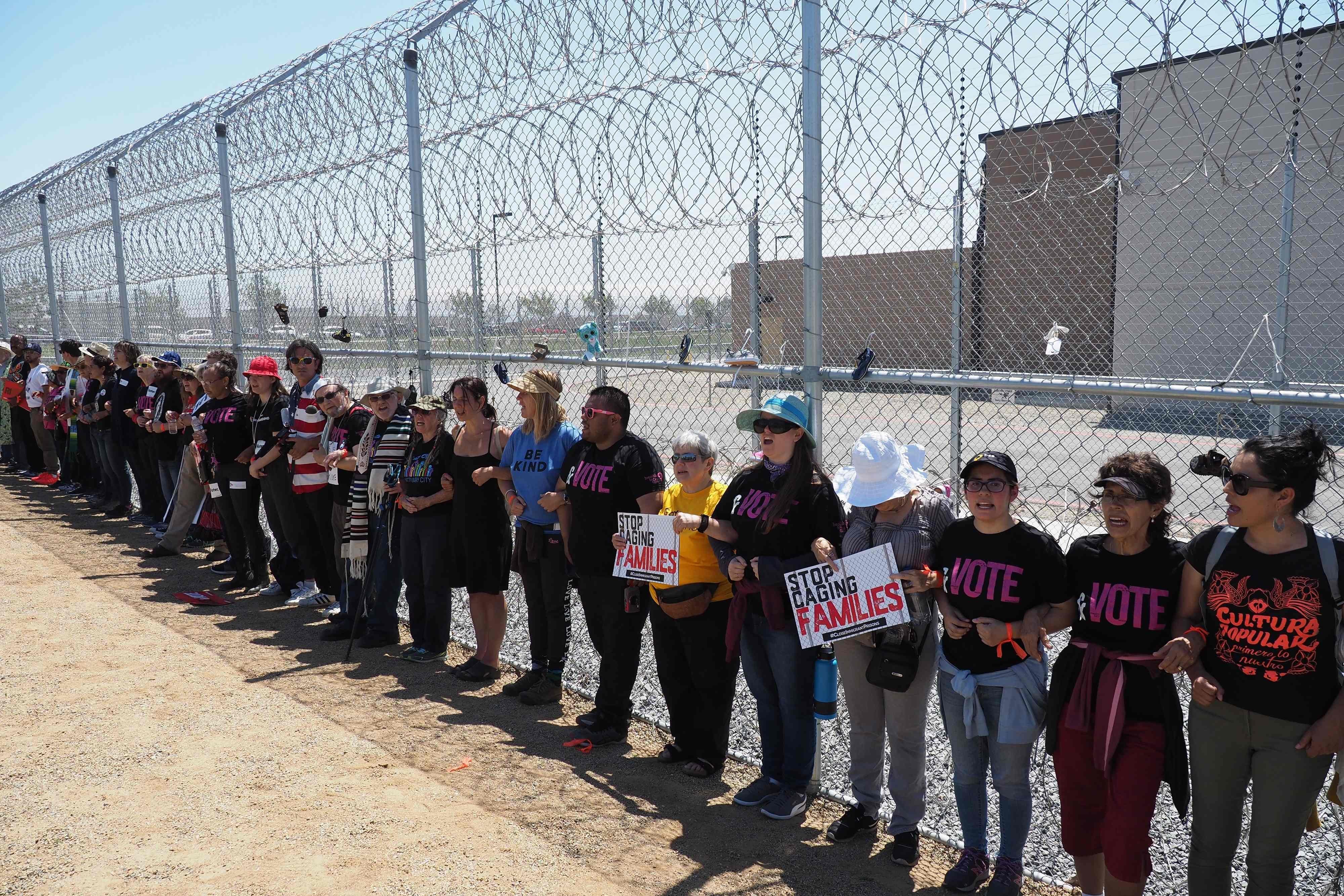
Protestors outside the Otay Mesa Detention Center, owned and operated by private prison company CoreCivic (Getty/Robyn Beck)
Immigration is a popular issue, especially in reference to the southern United States border, as people are afraid, and they want to find a common enemy to blame.
In this case, the common enemy is the supposed extreme influx of Mexican immigrants attempting to (or successfully doing so) cross the border, supposedly bringing crime. However, the issue of whether immigration is a problem or not is irrelevant; the main case is the role private prisons play in immigrant detention, which is genuinely disgusting. In the year 2016 alone, ~353,000 immigrants passed through a detention center, and three-quarters of the immigrant detainee population were being held in facilities operated and owned by private prison companies. This may not sound too dire until it is found that the largest private prison contractors – CoreCivic, Inc. and GEOGroup, Inc. – earned a rough total of $4 billion in the year following (2017). Prisons owned by corporations like those often defend themselves by saying that they are cutting costs while offering prison services at the same or better quality of government facilities, but evidence shows that these cost-cuts are negated by the fact that private prisons give much longer sentences and have no real difference to federal prisons in terms of recidivism. However, this is far from the worst of it all; private prisons rely on non-violent offenders to be sent to their prisons, as they reduce security costs, yet they keep those non-violent offenders in by lobbying for mandatory minimum sentencing laws, increasing their stays. The sentence length of a prisoner in a public prison is nearly half the sentence of one in a private prison, and it would be irrational to not acknowledge this as a problem.
How does one expect a prisoner to acknowledge their mistakes and grow from them while the system that is supposed to assist them in doing so is committing far more heinous crimes against its own citizens?
Regardless of a person’s status as a felon or criminal, they are still people who deserve to be treated with decency and care; crimes are usually done out of desperation, and without addressing the issues outside and inside the system, nothing will be done. Formerly incarcerated people are much more likely to be homeless, which may make them desire to go back to the inhumane yet straightforward way of prison life, compared to the uncertainties of freedom that prison does not prepare them for. Corporations such as UNICOR, regardless of being affiliated with the government or not, lie to us to pretend that prisoners are doing fine, when, in reality, they are being used for nefarious purposes. How must it feel to find out that a random prisoner, only by doing their job, may have been indirectly facilitating the uselessly long War in Afghanistan (legitimately lasting longer than the Vietnam War)? Overall, though, acknowledgment of the problem is not enough; we must act.
Science is something that is heavily funded in America, even by our federal government, and science clearly shows that programs administering aid such as cognitive-behavioral therapy can help in “deterring crime, assisting victims, and preventing recidivism”.
Not only that, but fostering a positive environment that allows prisoners to ease back into society will keep citizens out of the prison system and off the streets – providing easy ways for inmates to find employment and education after release would ease that process, as past inmates are already at a significant disadvantage in the job market. Rehabilitation paired with a complete overhaul of how we view sentencing – the possible elimination of mandatory minimums – would not only improve the lives of inmates but also improve public safety and increase the happiness index of the United States (which barely cracks the top fifteen internationally, regardless of our immense gross domestic product). It may take time, but the results will prove the effort to be meaningful.
Overall, we are facing a horrible amount of injustices in the current prison system, which is run by corporations and the federal government to increase profit margins and continue global conflicts instead of focusing on bettering the prisoner and society.
Currently, prisoners and past inmates are viewed as subhuman, but it does not make much sense to view them this way; regardless of (alleged) criminal history, they are still people with needs, wants, and humanity. When we destroy the connections between people, corruption, objectification, and profit, we will, in turn, build the bridges between people, empathy, and safety. What is the meaning of the criminal justice system if its concept of justice is skewed by arbitrary, internal factors and biases?
Further Reading
Bureau of Justice Statistics. Recidivism of Prisoners Released in 24 States in 2008: A 10-Year Follow-up Period (2008-2018). Sept. 2021,bjs.ojp.gov/sites/g/files/xyckuh236/files/media/document/rpr24s0810yfup0818_sum.pdf.
Carson, E. Ann. “Prisoners in 2016.” Bureau of Justice Statistics, edited by Bureau of Justice Statistics, U.S. Department of Justice, Jan. 2018,bjs.ojp.gov/content/pub/pdf/p16.pdf.
Couloute, Lucius. “Nowhere to Go: Homelessness among Formerly Incarcerated People.” Prison Policy Initiative, Aug. 2018, www.prisonpolicy.org/reports/housing.html.
Drexler, Ken. “Research Guides: 13th Amendment to the U.S. Constitution: Primary Documents in American History: Introduction.” Loc.gov, 1 Aug. 2018, guides.loc.gov/13th-amendment.
Duwe, Grant, and Valerie Clark. “The Effects of Private Prison Confinement on Offender Recidivism.” Criminal Justice Review, vol. 38, no. 3, Feb. 2013, pp. 375–94, https://doi.org/10.1177/0734016813478823. Accessed 28 May 2019.
Feucht, Thomas, and Tammy Holt. “Does Cognitive Behavioral Therapy Work in Criminal Justice? A New Analysis from CrimeSolutions.” National Institute of Justice, 25 May 2016, nij.ojp.gov/topics/articles/does-cognitive-behavioral-therapy-work-criminal-justice-new-analysis-crimesolutions.
Initiative, Prison Policy. “Prison Wages: Appendix.” Www.prisonpolicy.org, 10 Apr. 2017, www.prisonpolicy.org/reports/wage_policies.html.
Jackson, Anita Sarah, et al. TOXIC SWEATSHOPS. Edited by Happy /L.A. Hyder et al., Oct. 2006, static.prisonpolicy.org/scans/ToxicSweatshops.pdf. Accessed 4 Oct. 2023.
Luan, Livia. “Profiting from Enforcement: The Role of Private Prisons in U.S. Immigration Detention.” Migrationpolicy.org, 16 May 2018, www.migrationpolicy.org/article/profiting-enforcement-role-private-prisons-us-immigration-detention.
Office of the Inspector General. Findings of Fraud and Other Irregularities Related to the Manufacture and Sale of Combat Helmets by the Federal Prison Industries and ArmorSource, LLC, to the Department of Defense. Edited by U.S. Department of Justice, Aug. 2016.
Prison Legal News. “Prisoners Exposed to Toxic Dust at UNICOR Recycling Factories | Prison Legal News.” Www.prisonlegalnews.org, 15 Jan. 2009, www.prisonlegalnews.org/news/2009/jan/15/prisoners-exposed-to-toxic-dust-at-unicor-recycling-factories/.
The Bureau of Investigative Journalism. “Drone Warfare — the Bureau of Investigative Journalism.” The Bureau of Investigative Journalism, 2021, www.thebureauinvestigates.com/projects/drone-war.
UNICOR. “UNICOR Home Page.” Unicor.gov, 2023, www.unicor.gov/#. Accessed 4 Oct. 2023.
World Prison Brief. “United States of America | World Prison Brief.” Prisonstudies.org, 2019, www.prisonstudies.org/country/united-states-america.