


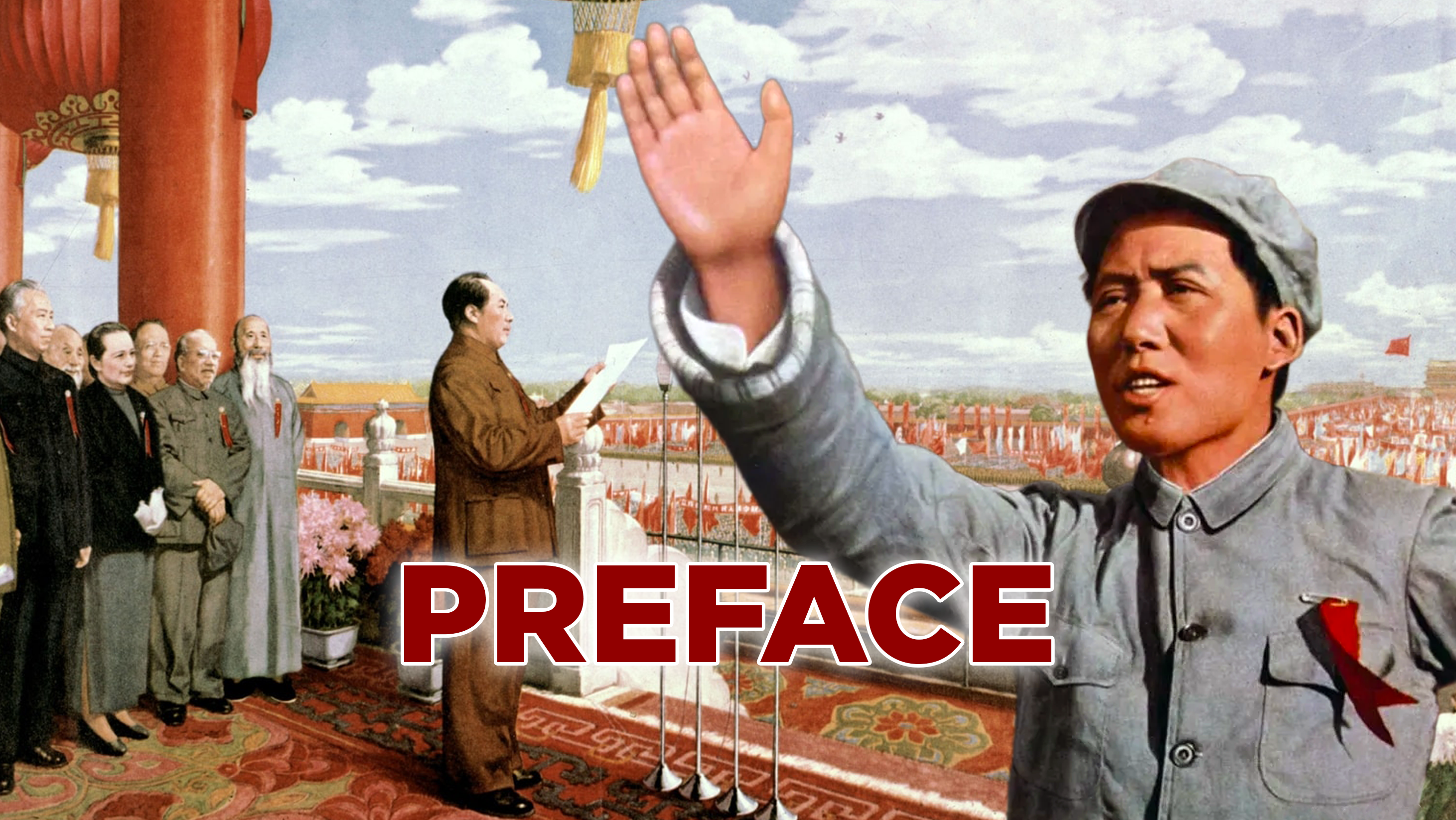
In 1936, American journalist Edgar Snow spent four months interviewing members of the Communist Party of China, including the notable Mao Zedong. His reportings, later synthesized into the book Red Star Over China, revealed a pattern in the way Mao retold historical events: despite his leadership role in many post-1927 Chinese affairs, he rarely spoke of himself as an individual actor. Snow eventually realized that many Party members “would be able to tell everything that had happened in [their] early youth, but once [they] had become identified with the Red Army [they] lost [themselves] somewhere.”1 Their histories became collective, unintentionally straying from individualist framings of their endeavors. After directly inquiring about his personal life, Mao offered to give direct accounts of his early life, but still “seemed mildly surprised that people should spend their time speculating about him.” 2
This sort of conflict between individual and collective is what shapes how one must approach Mao’s life. To begin, few figures are as debated, misunderstood, and mythologized as Mao Zedong. The American State Department and education system work in tandem to produce a black-and-white story of the man: an absolute monster with no regard for humanity nor the wellbeing of his people. There are even published books written by “scholars” that take that pseudohistorical view – just read the absolute hogwash that is Mao: The Unknown Story. This view on Mao is not only a gross oversimplification, but a shameful mechanism of explaining away Mao’s true victories as well as his deep imperfections as a boy, a man, a student, and a leader.
Additionally, it is important to note that viewing history through the framework of individuals and not collectives can lead to drawing fallacious conclusions. As someone interested in political history, I try my hardest to avoid using the Great Man theory, which isolates the individual from the social, material conditions around them. Yet, leaders do not emerge in a vacuum. Of course, roles of leadership are critical ones as they direct the people under their guidance, but one must remember that a leader’s goals are only realized if their people make the choice to follow their word. Faith in a leader builds through the words and actions of the leader, and this influence is also something important to study. That is why I would like to explore the life of Mao Zedong, critically examining his life along with the cultural, sociopolitical environment around him – how that influenced him, and how he influenced others.
Across three parts – The Making of Mao (1893–1949), Mao’s China (1949–1976), and The World Mao Left Behind (1976–Present) – this series traces Mao’s journey from Shaoshan to Beijing, from rural organizer to national leader, from historical figure to global symbol. Each part will consist of a few articles to dig deep into the details that blossomed into impact.
If we want to understand the world Mao helped build, we need to start at the beginning. Part I begins in Shaoshan, where a boy named Mao Zedong first learned the art of rebellion.
Further Reading
1 Snow, Edgar. Red Star over China - 1st Revised and Enlarged Ed. New York: Grove Press, Inc., 1968, 129.
2 Ibid., 130